Adventure Squad
Building a Women's Camping Community from a Viral TikTok: Brand building through applied UX research
Adventure Squad is a women-only camping club and brand I founded and grew from a single viral TikTok into a community of 800+ members across Southern California.
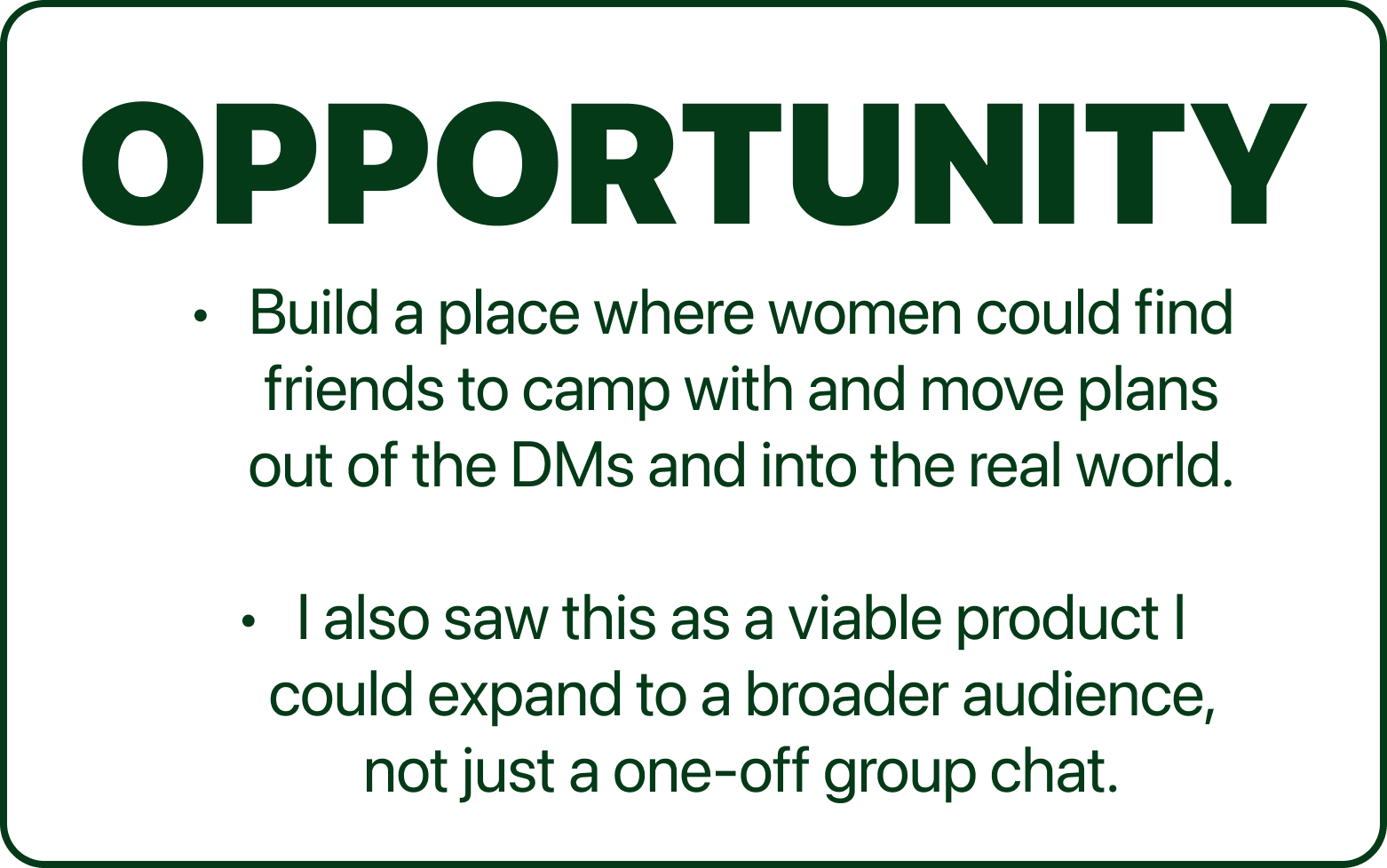
This case study is a little different from a typical product design project. There was no brief, no budget, and no research team. Instead, the audience told me what they needed in public, and I designed the brand, the community structure, and the events in real time alongside them. I treated a community like a product, and the community became my research team.
Role: Founder, brand strategist, community manager
Team: Me + one graphic designer
Timeline: 1-month launch, 1 year of iteration
Channels: TikTok, Instagram, Discord
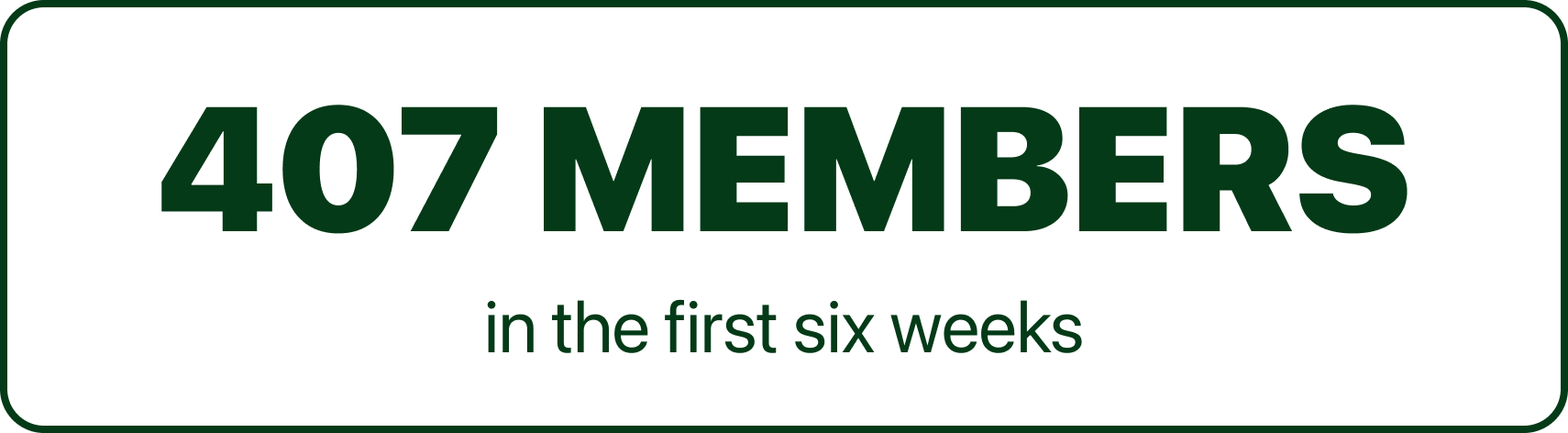
Results: 407 members in 6 weeks → 800+ at 10 months · 40+ events · $22k+ gross from trips · zero paid staff
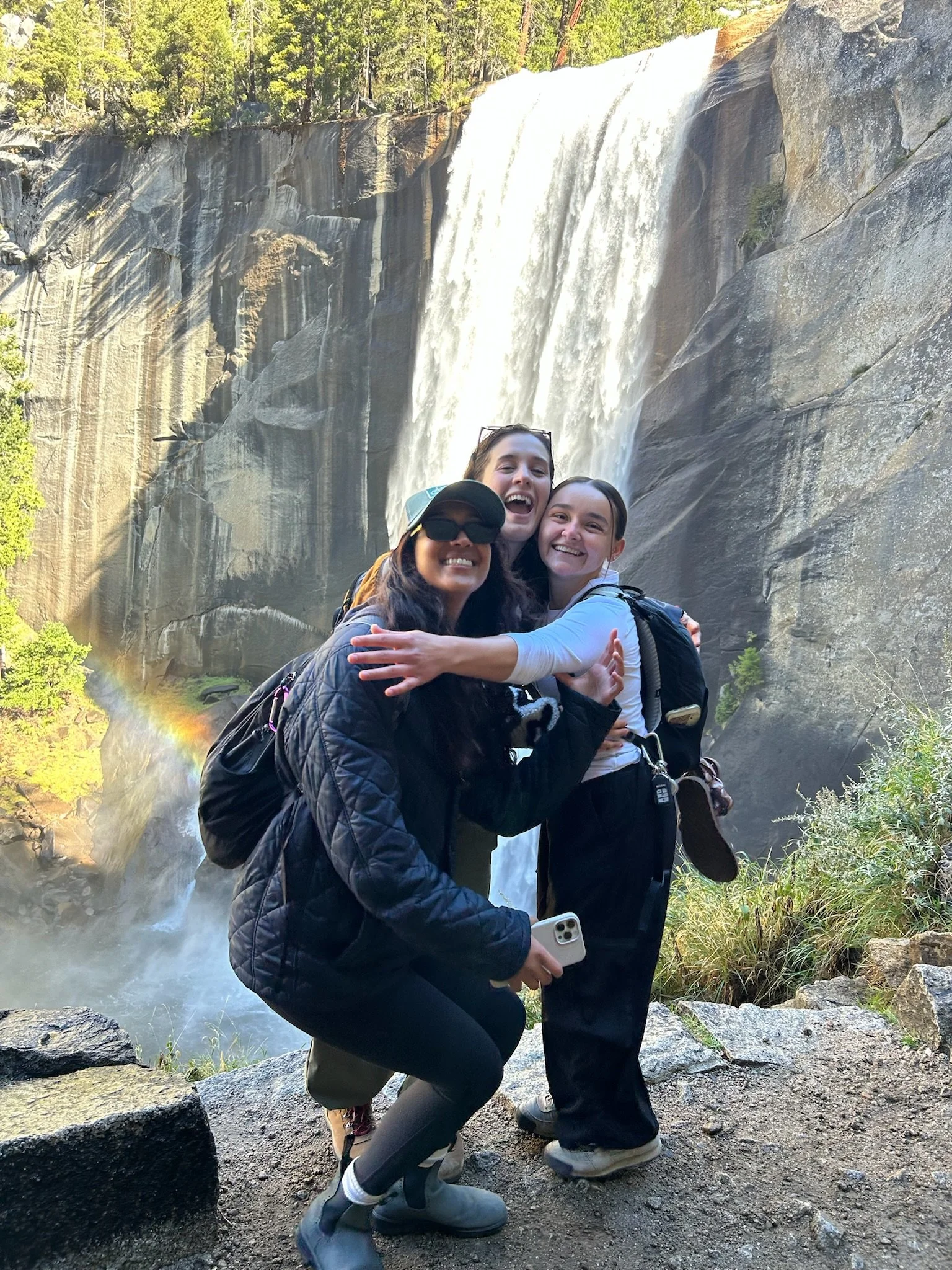
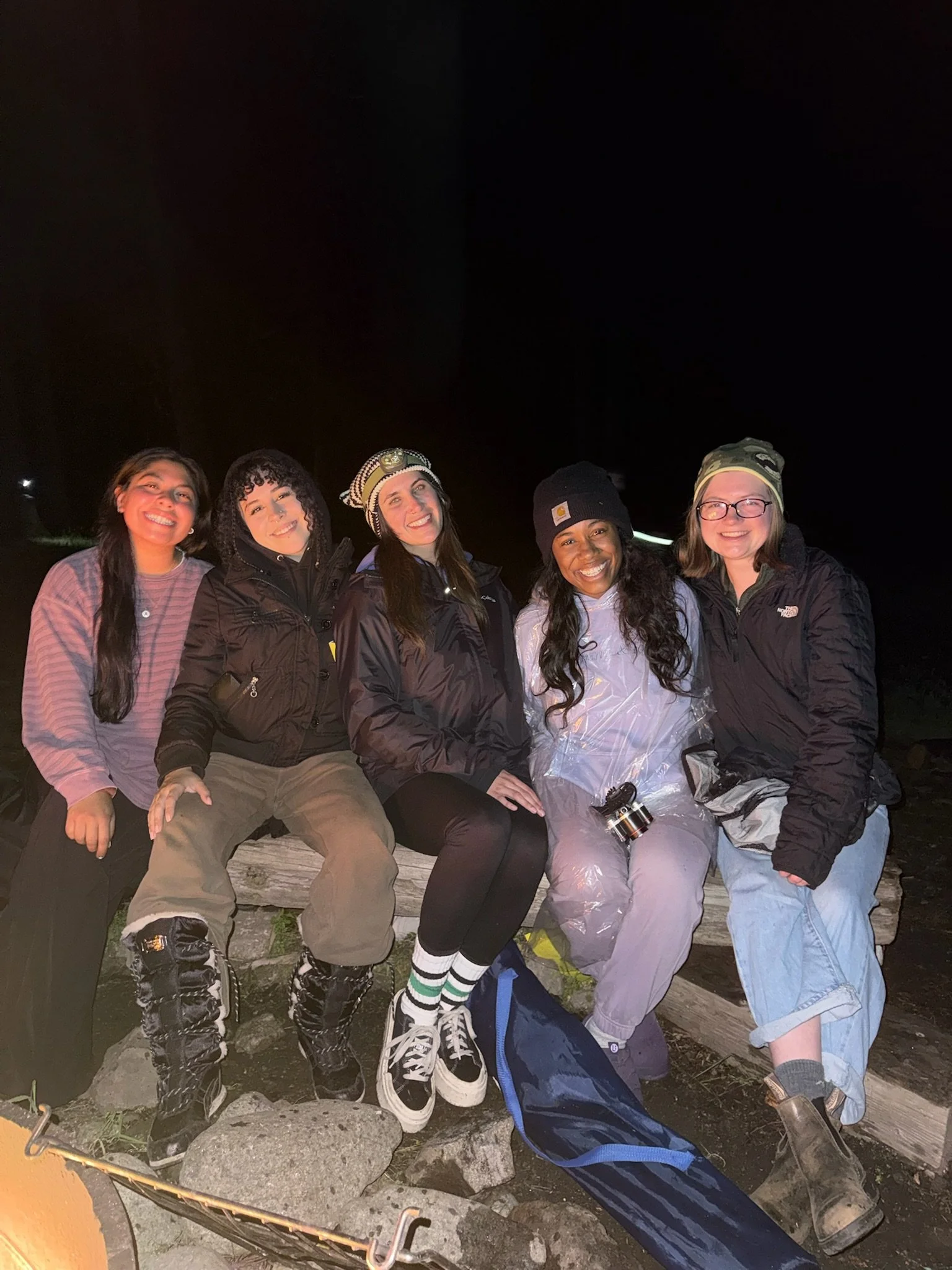
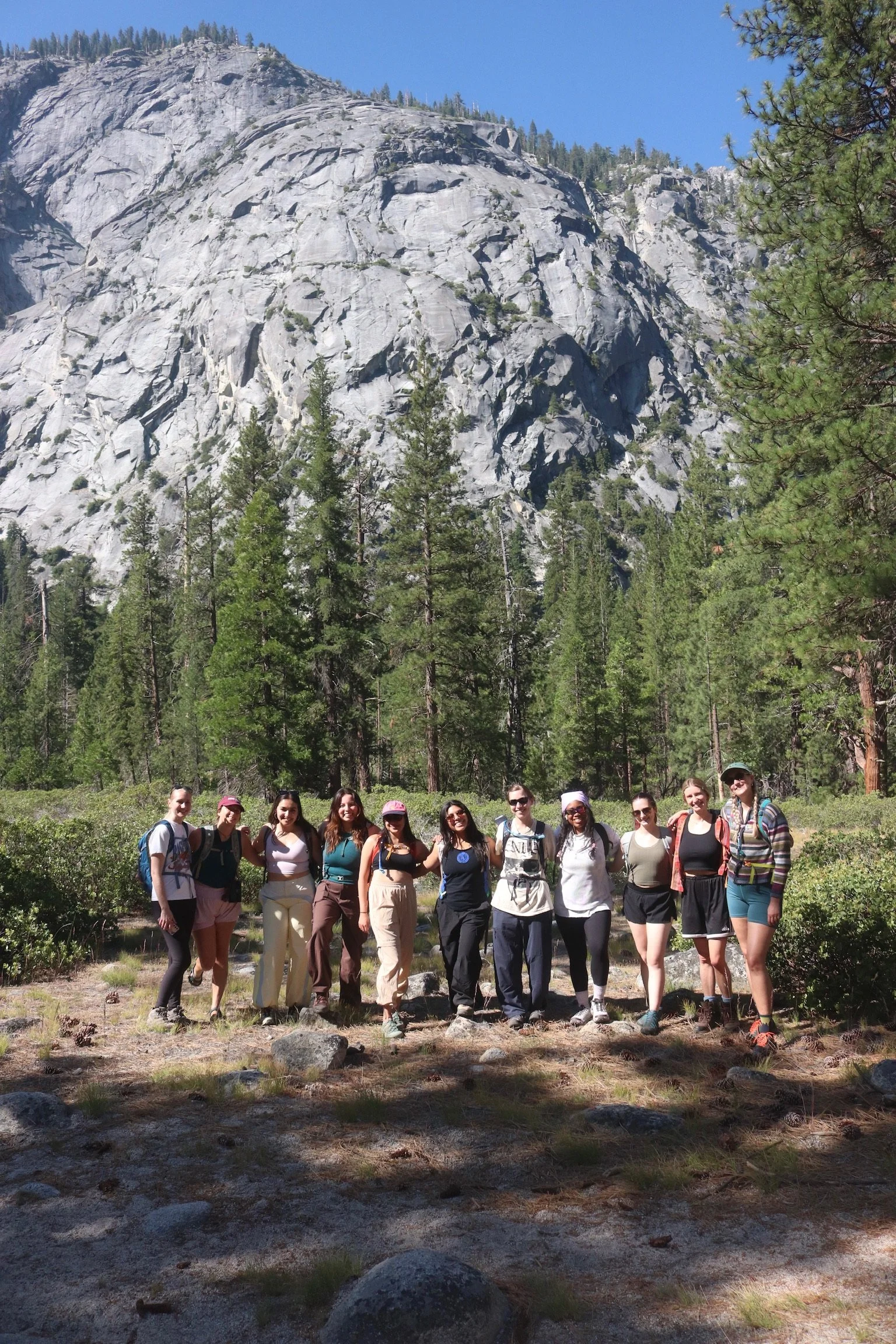
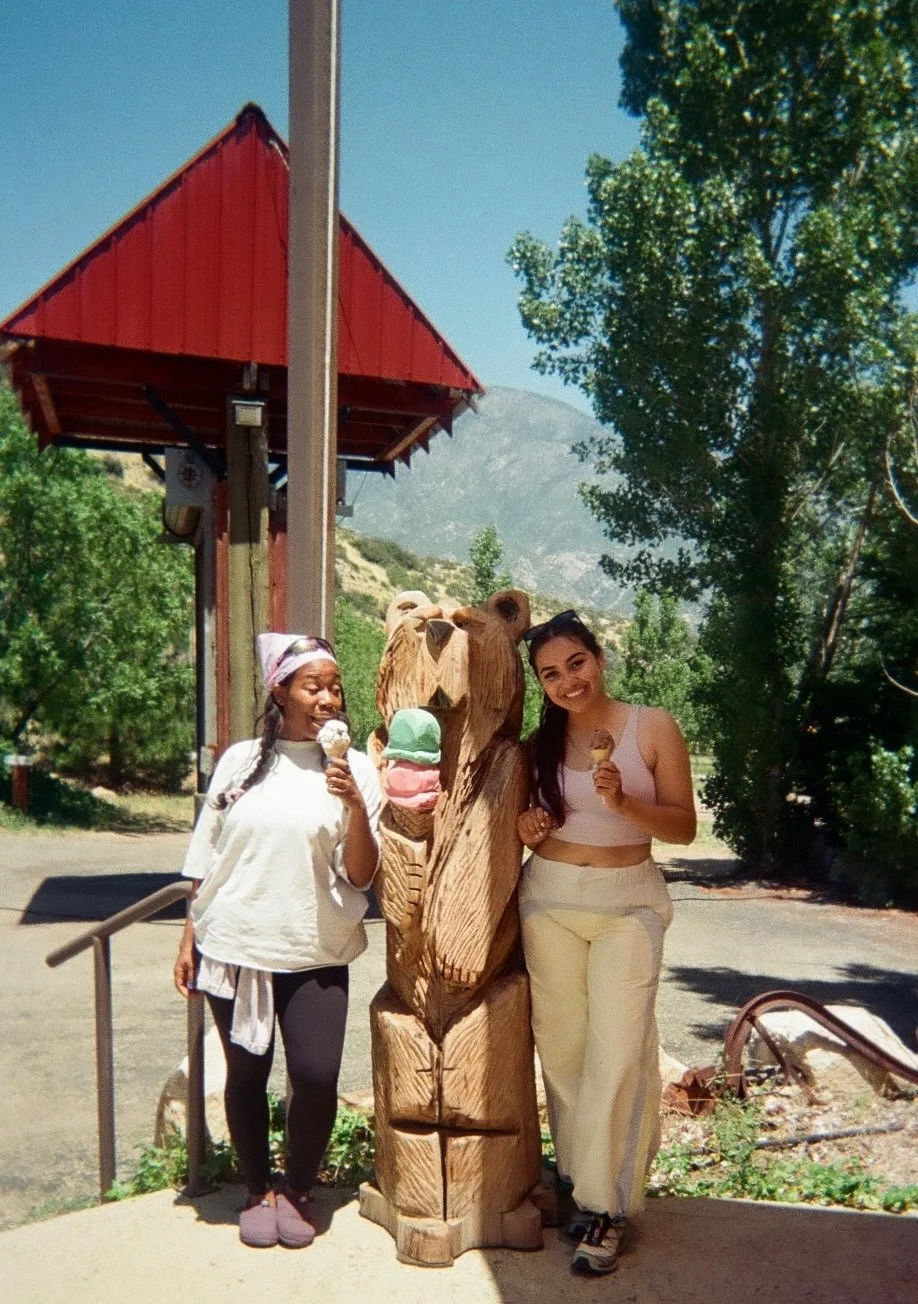
THE SPARK: listening before building
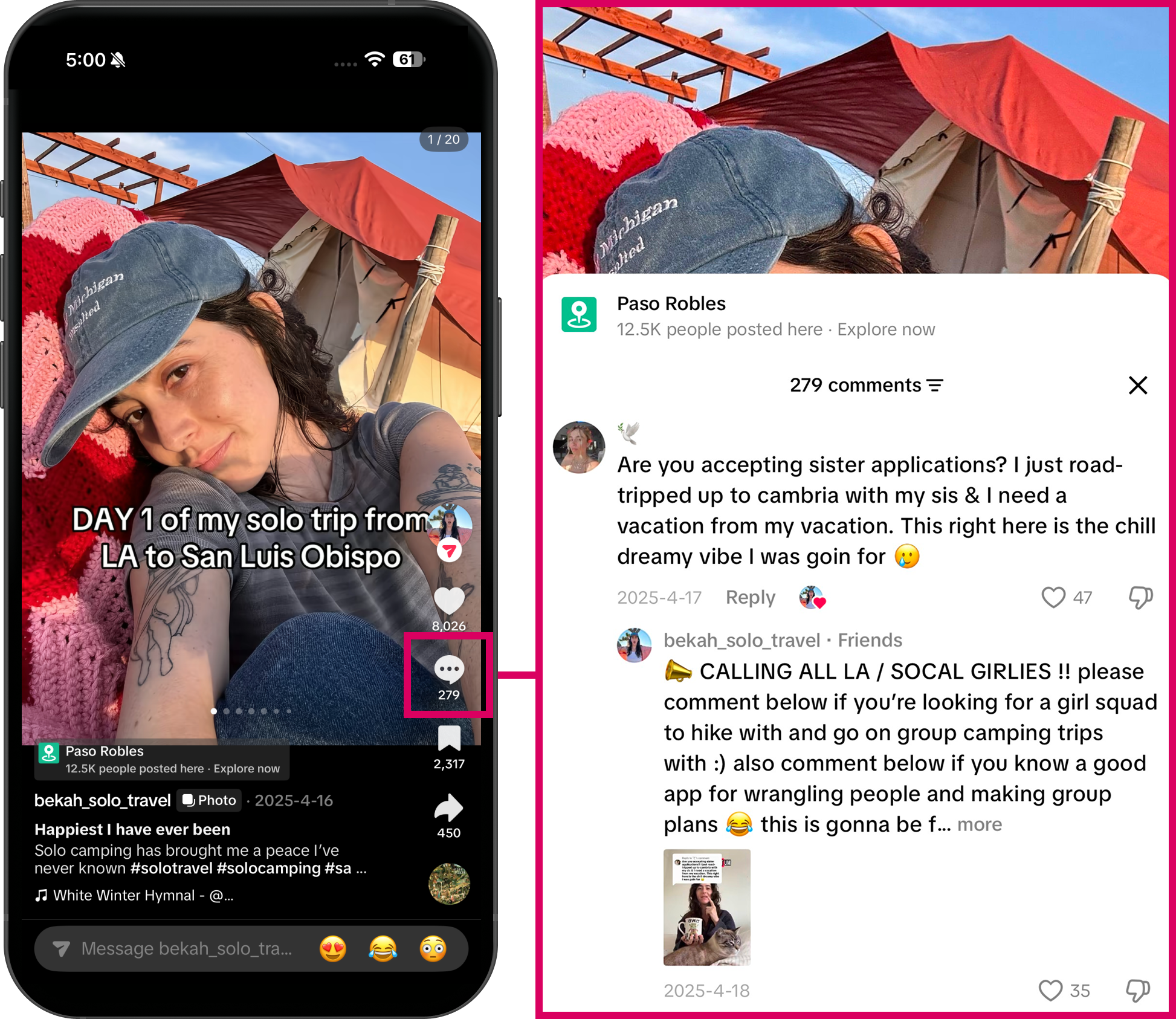
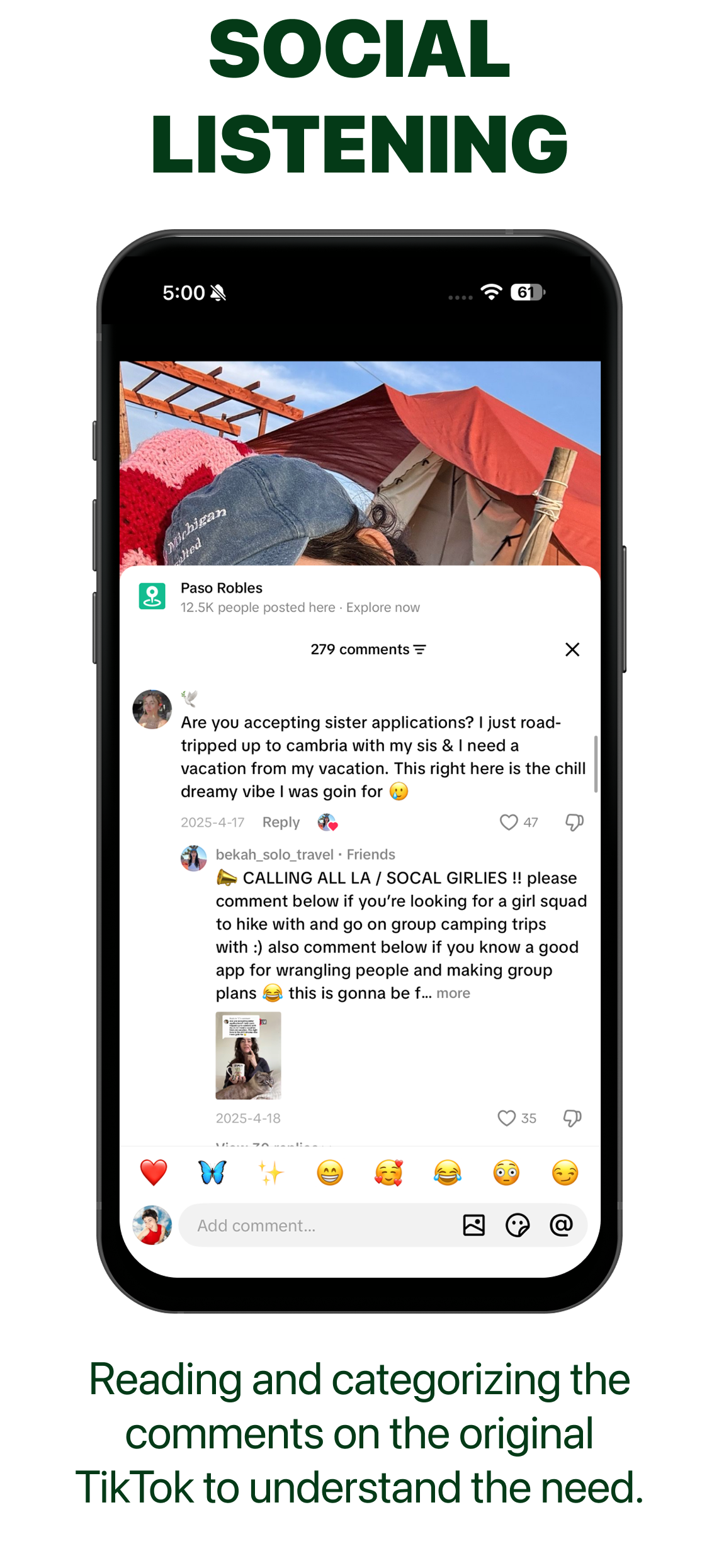
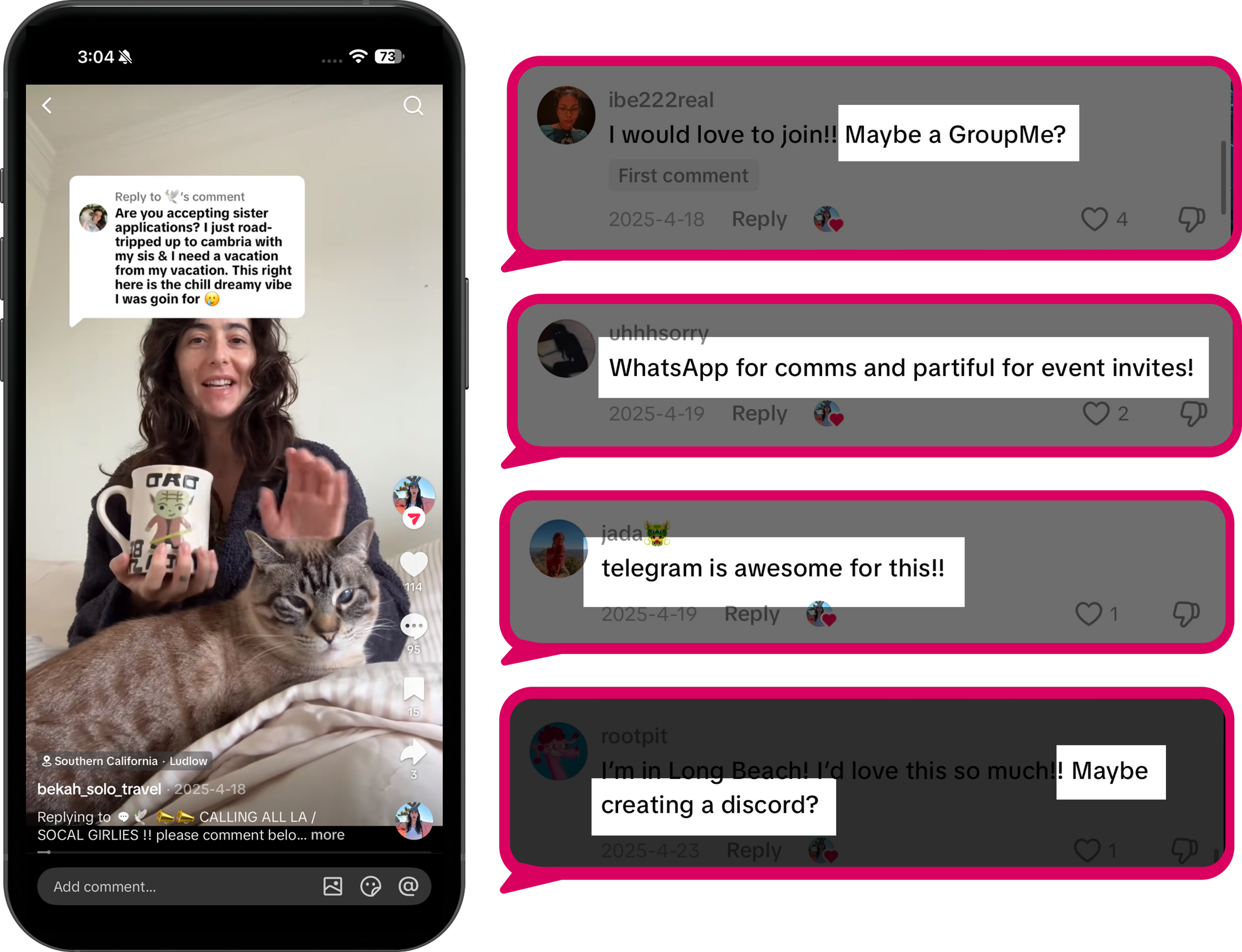
It started with a TikTok about a solo camping trip. It went viral, but the view count wasn't the interesting part. The comments were. Hundreds of women said some version of the same thing: I want to do this, but I don't have anyone to go with.
One comment stood out: "are you taking sister applications? I want to come on the next one!" It went micro viral on its own, collecting thousands of likes and replies.
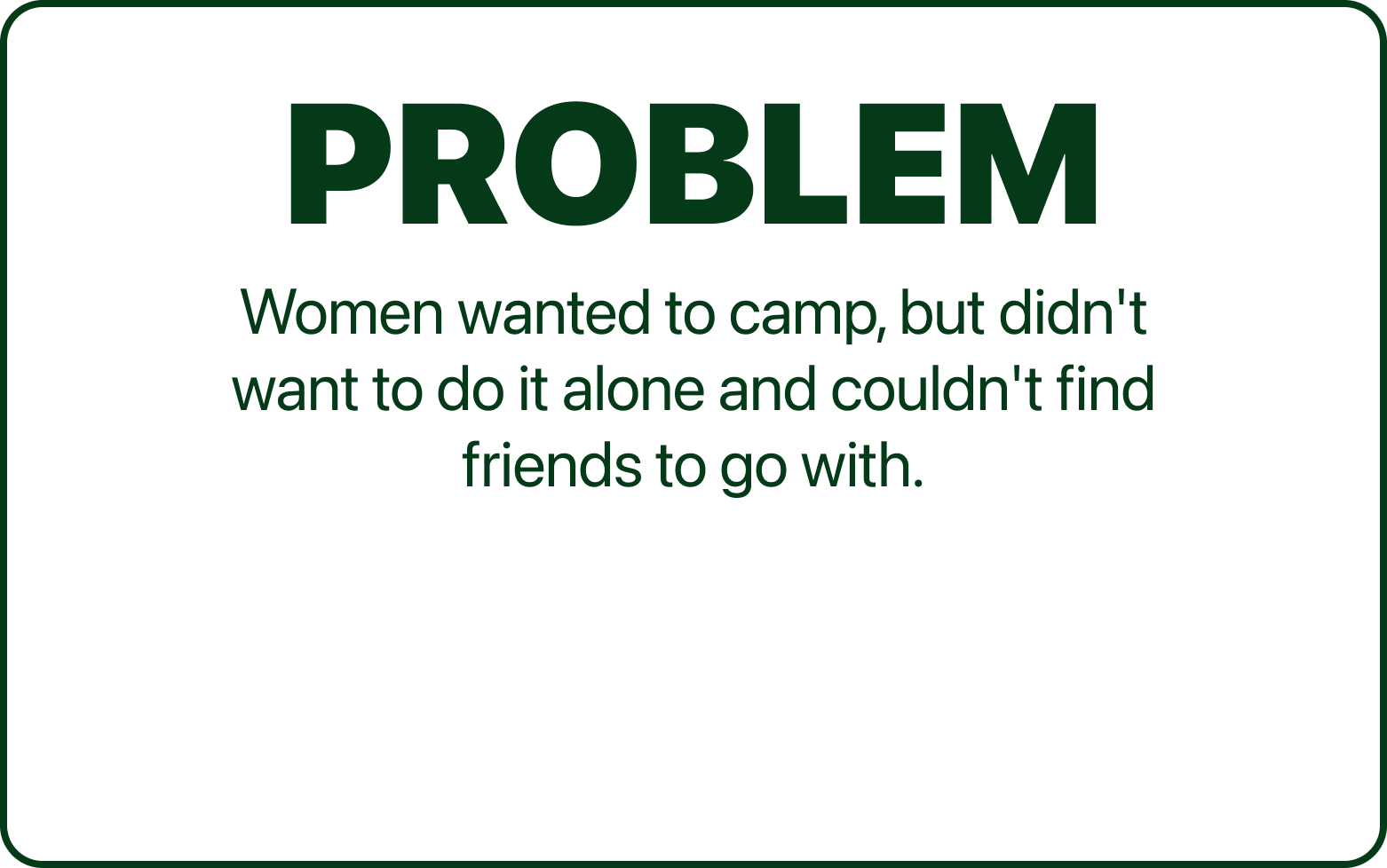
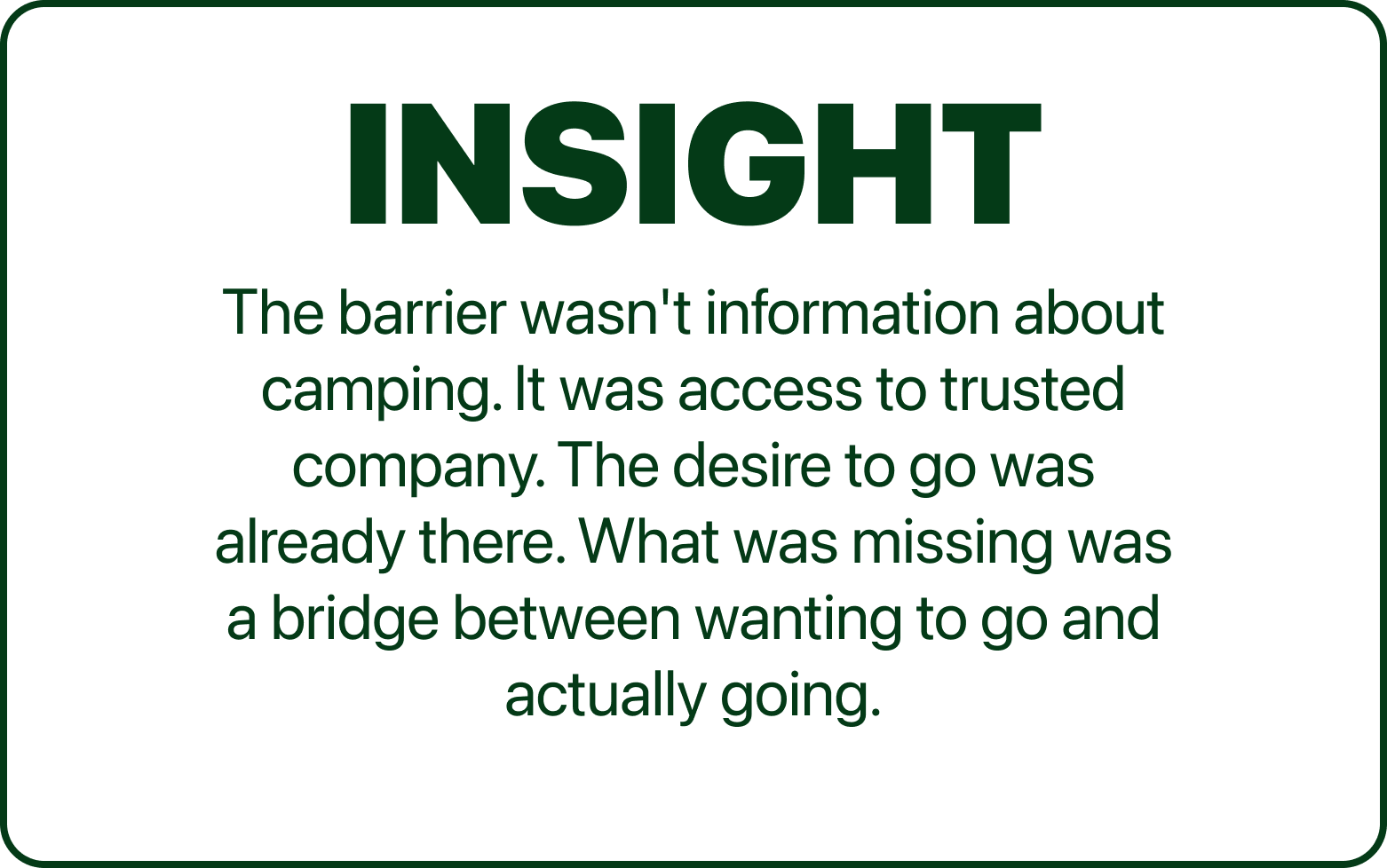
I didn't have a product yet, but I had something most teams spend months and real budget trying to get: a large, self-selected audience describing an unmet need, unprompted.
Research in the wild
With no formal research budget, I relied on the methods the situation made available:
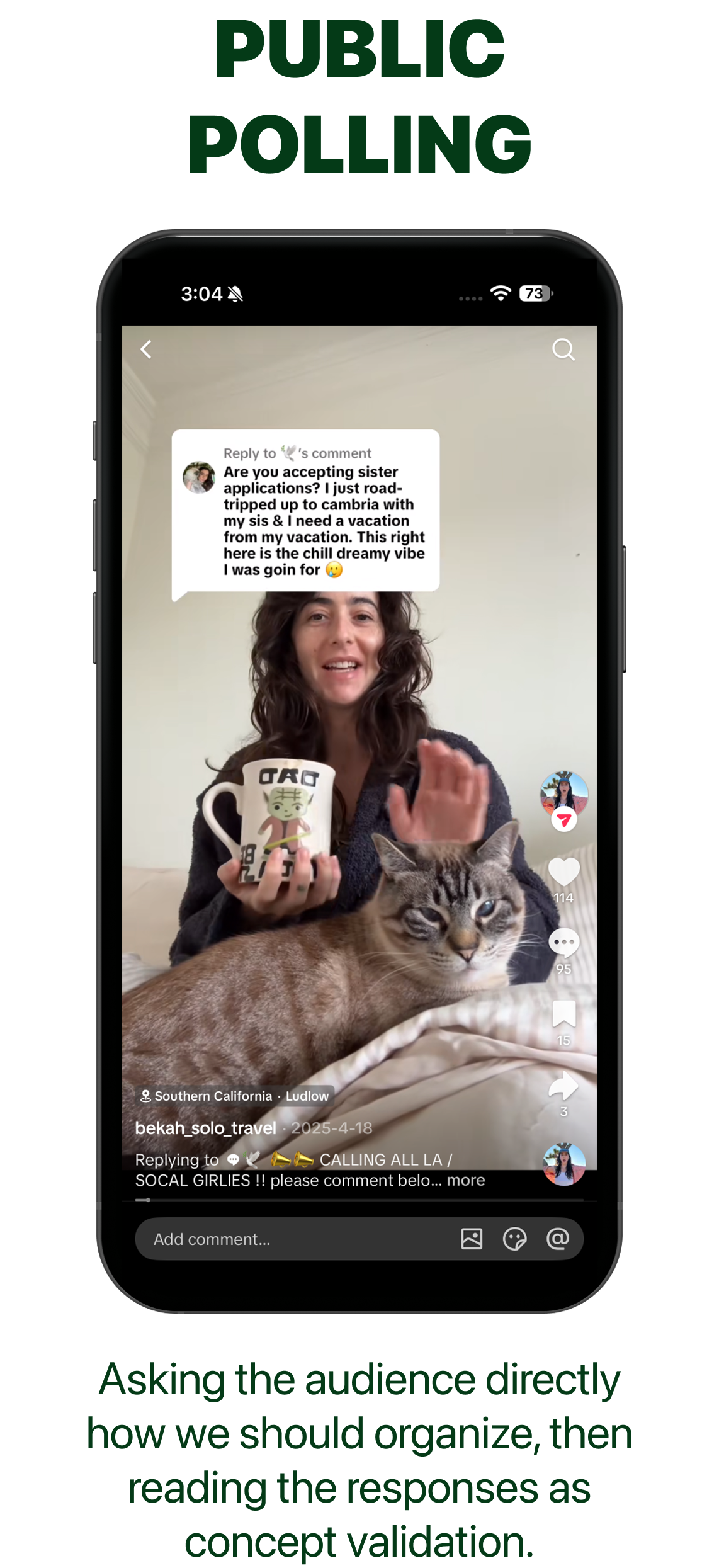
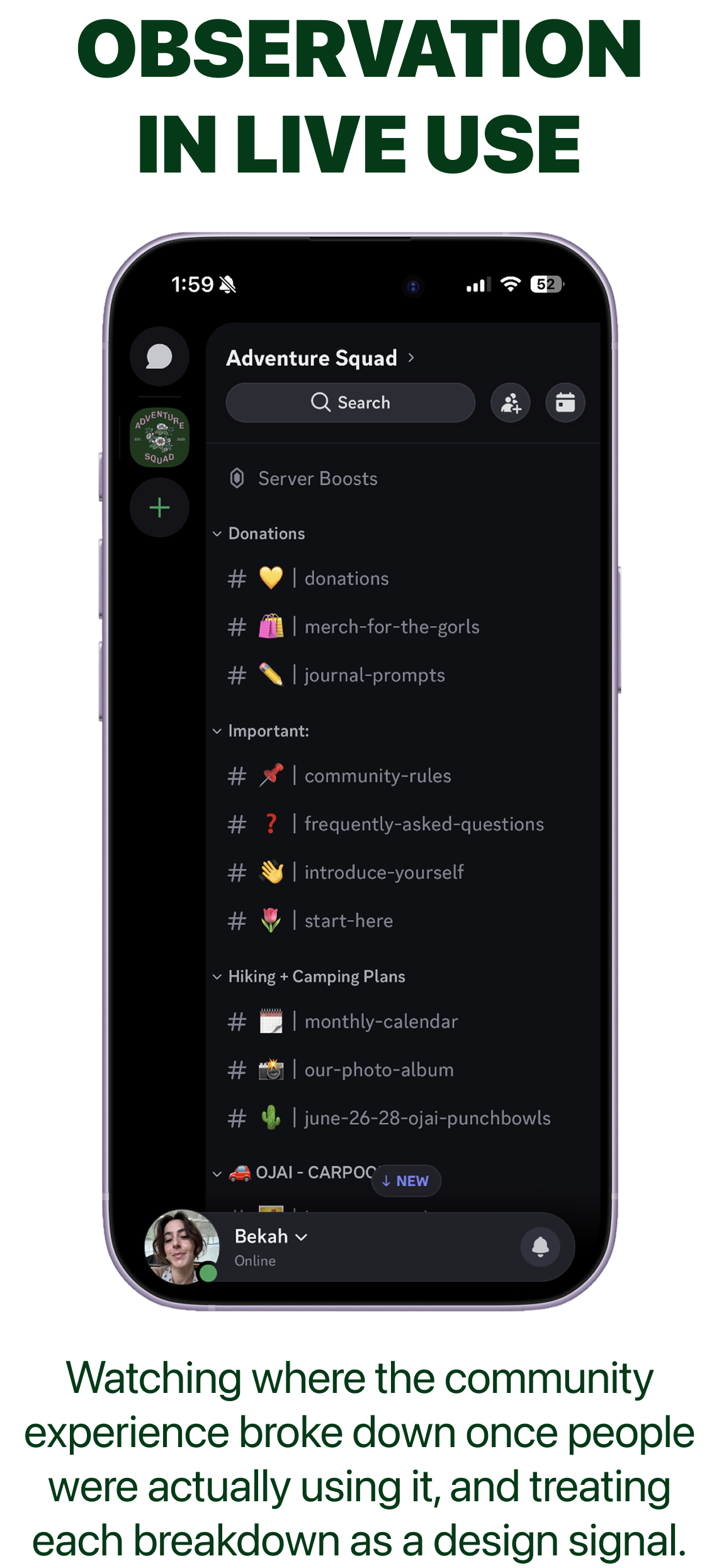
These aren't traditional usability studies, and I don't present them as such. They were the right tools for a fast-moving, audience-first launch, and they kept every decision tied to what real people were saying and doing.
Choosing the platform:
I let the audience decide
Before picking a tool, I went back to the audience. I posted a second TikTok asking how we should launch a group chat to plan trips together. It drew 95 comments, with suggestions including Telegram and WhatsApp. Across the responses, one option felt most viable to the women who would actually use it: Discord.
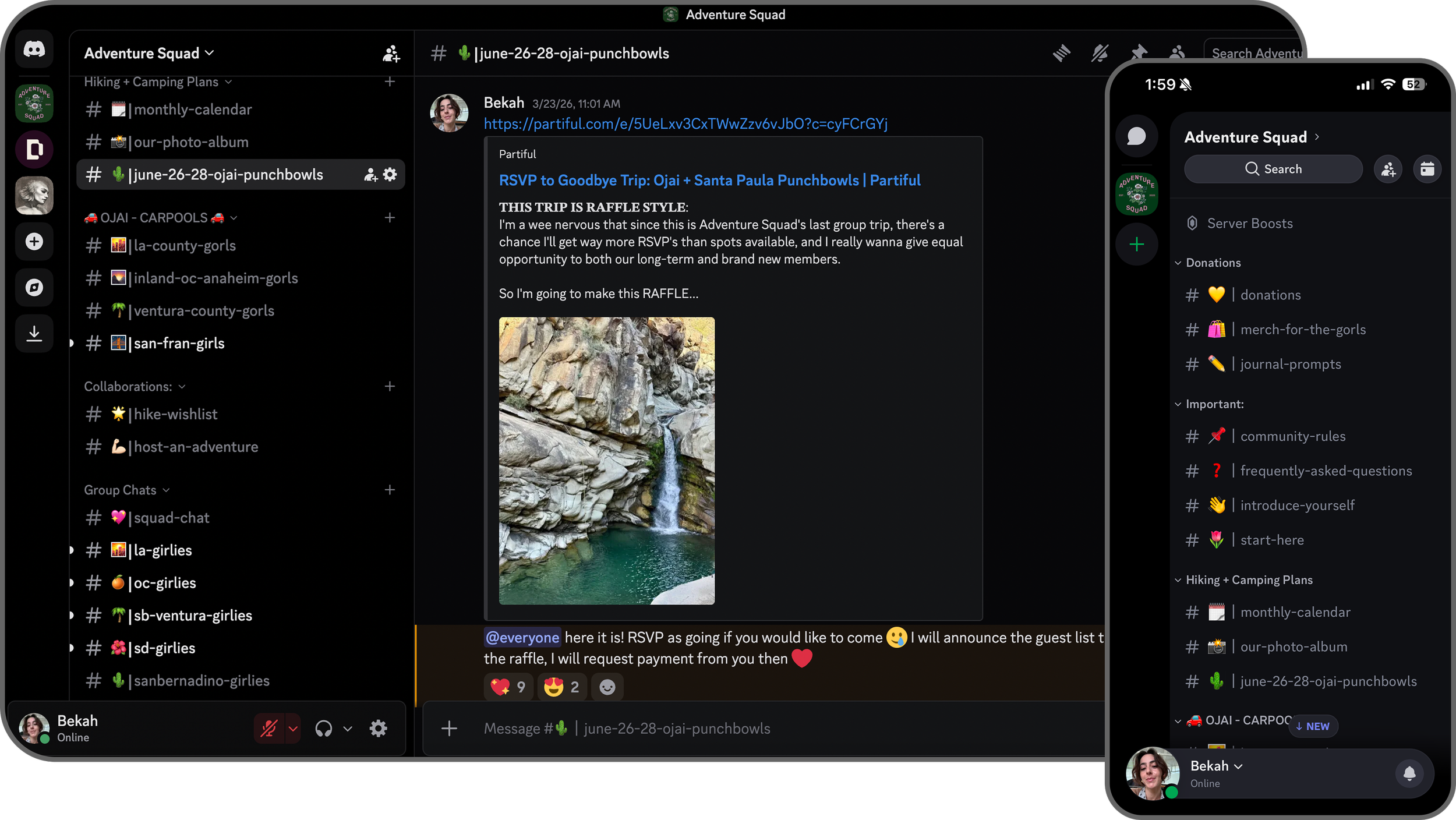
Discord gave me the structure I'd need to grow: separate channels, categories, and roles, in one place people could join instantly. Because it was the platform the audience had chosen, onboarding friction was low, and I launched the same day so I could start learning from real use right away.
THE RESULTS
COMPETITIVE ANALYSIS
Designing for belonging & sisterhood.
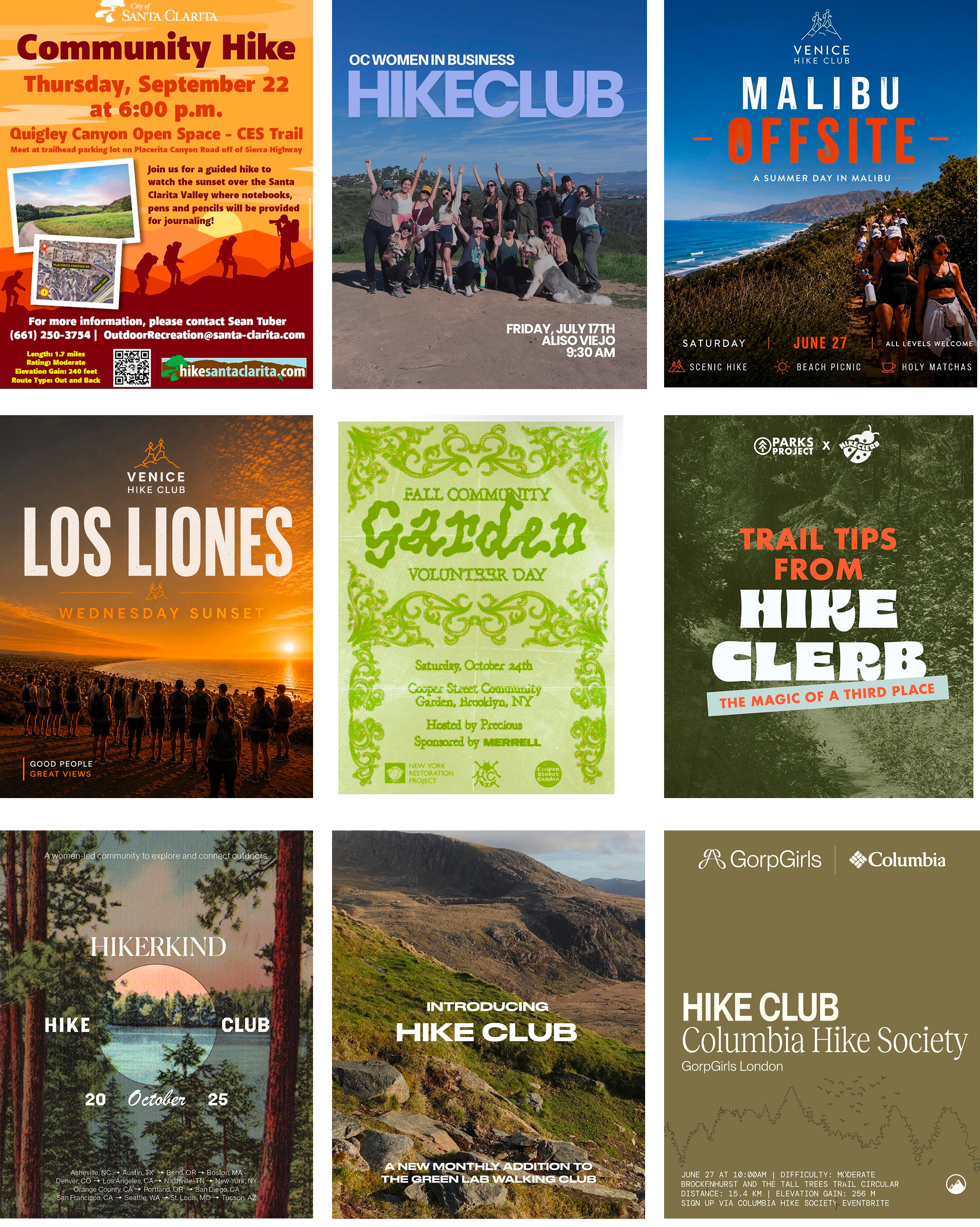
Most outdoor communities look alike: neutrals, beige, greens, blues, brown. It's a safe, earthy palette and the visual shorthand for "nature." But Adventure Squad was women-only, and I wanted that to be felt before anyone read a word. The brand needed to feel distinctly feminine and light, and to stand out in a feed full of earth tones.
My goal was that in a category that looks the same, the brand would signal "this is for us" at a glance. A graphic designer joined me early on, and together we developed the design language I used to advertise trips and events across Instagram, TikTok, and Discord.
BRANDING DECISIONS
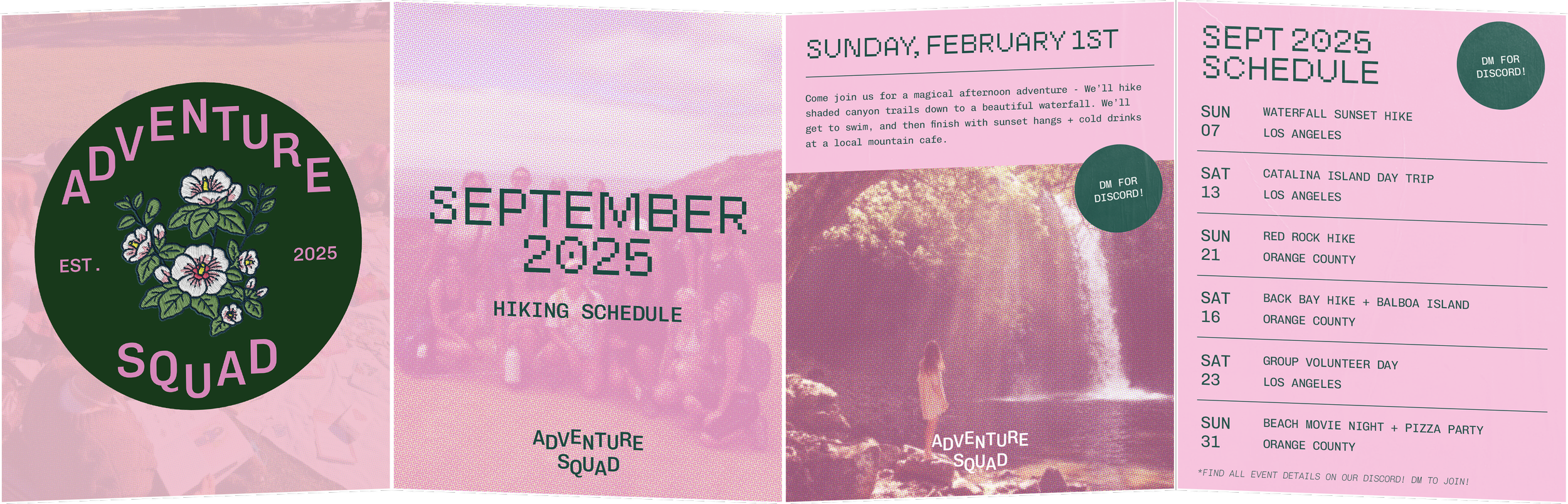
Color: pink + green.
Green anchors the brand in nature, so it still reads clearly as an outdoors community. Pink is the differentiator, giving the brand personality and a sense of style the category rarely offers. The two colors do separate jobs on purpose, and the hierarchy keeps the brand recognizable.
Iconography: florals.
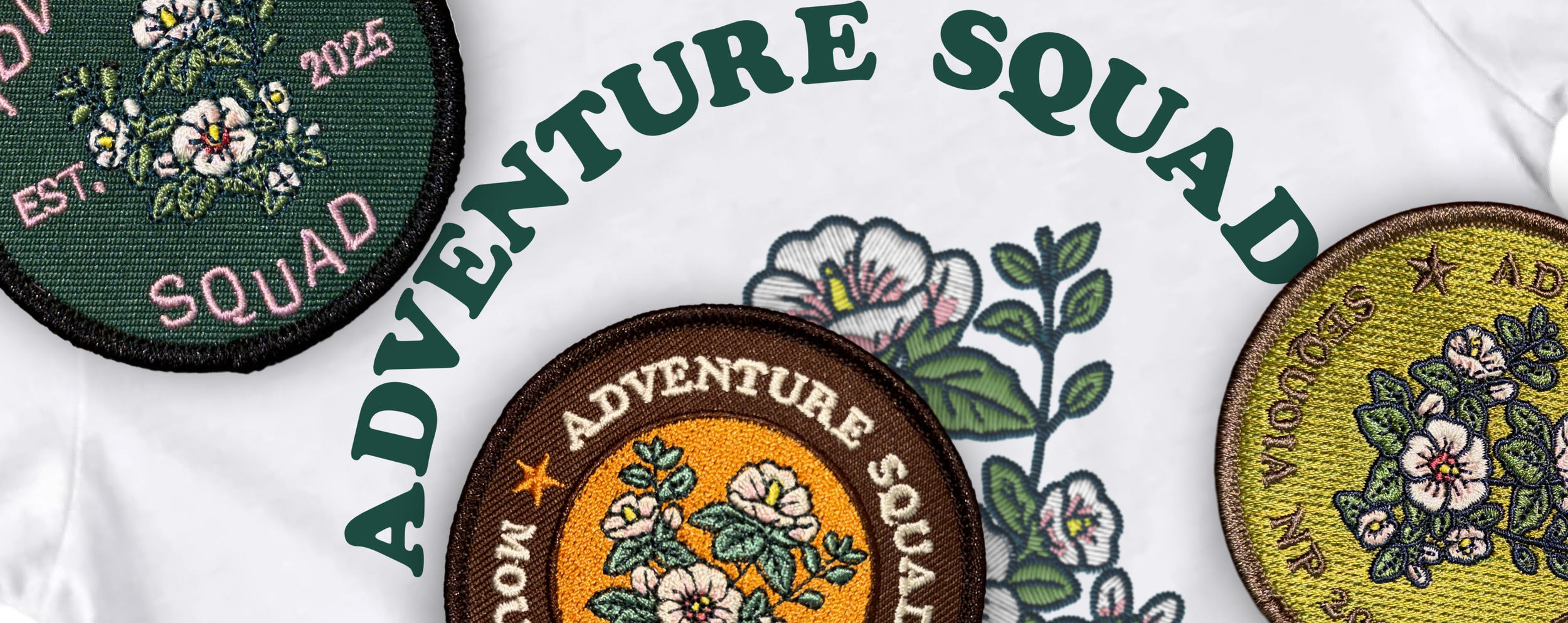
Patches are a staple of outdoor culture, and many feature mountains or plants. I wanted our national park-style patches and merch to carry meaning, so I researched flowers associated with sisterhood and found the transvaal daisy. In the end, I chose a different floral that was easier to design, stitch, and print. We were producing merch quickly and in small runs, and a motif that reproduced cleanly mattered more than a perfect symbol.
Layout: scrapbook and collage.
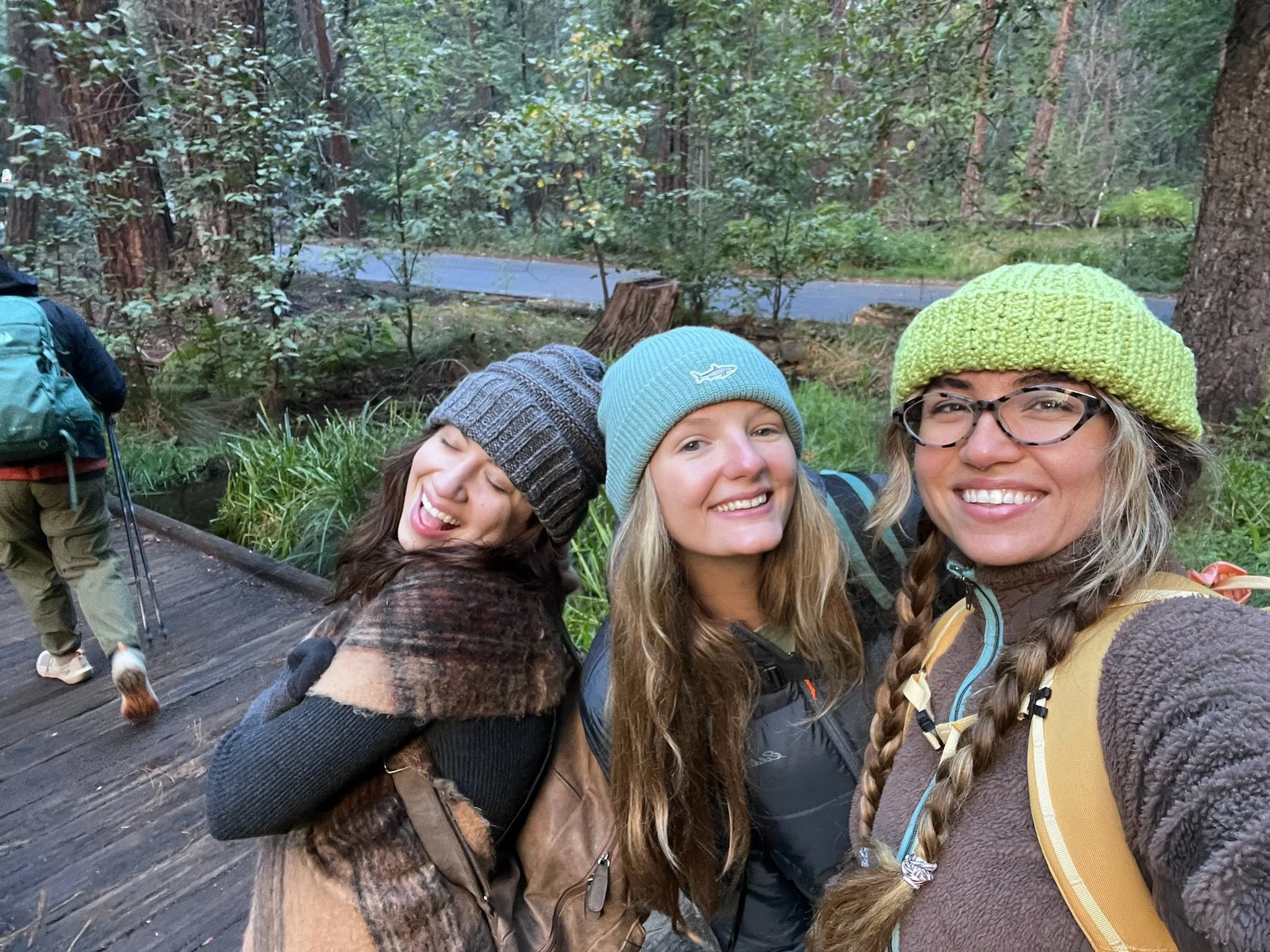
The visual system leans on scrapbook and collage: layered photos, cutouts, and handmade textures. The style shows a community assembled from many people and moments, reinforcing the feeling that we're in this together.
Scaling: Problems and design responses.
Rapid growth meant the community broke in new ways every few weeks. I had no roadmap. Instead, I watched where the experience failed and designed a response each time. Here's what that looked like:
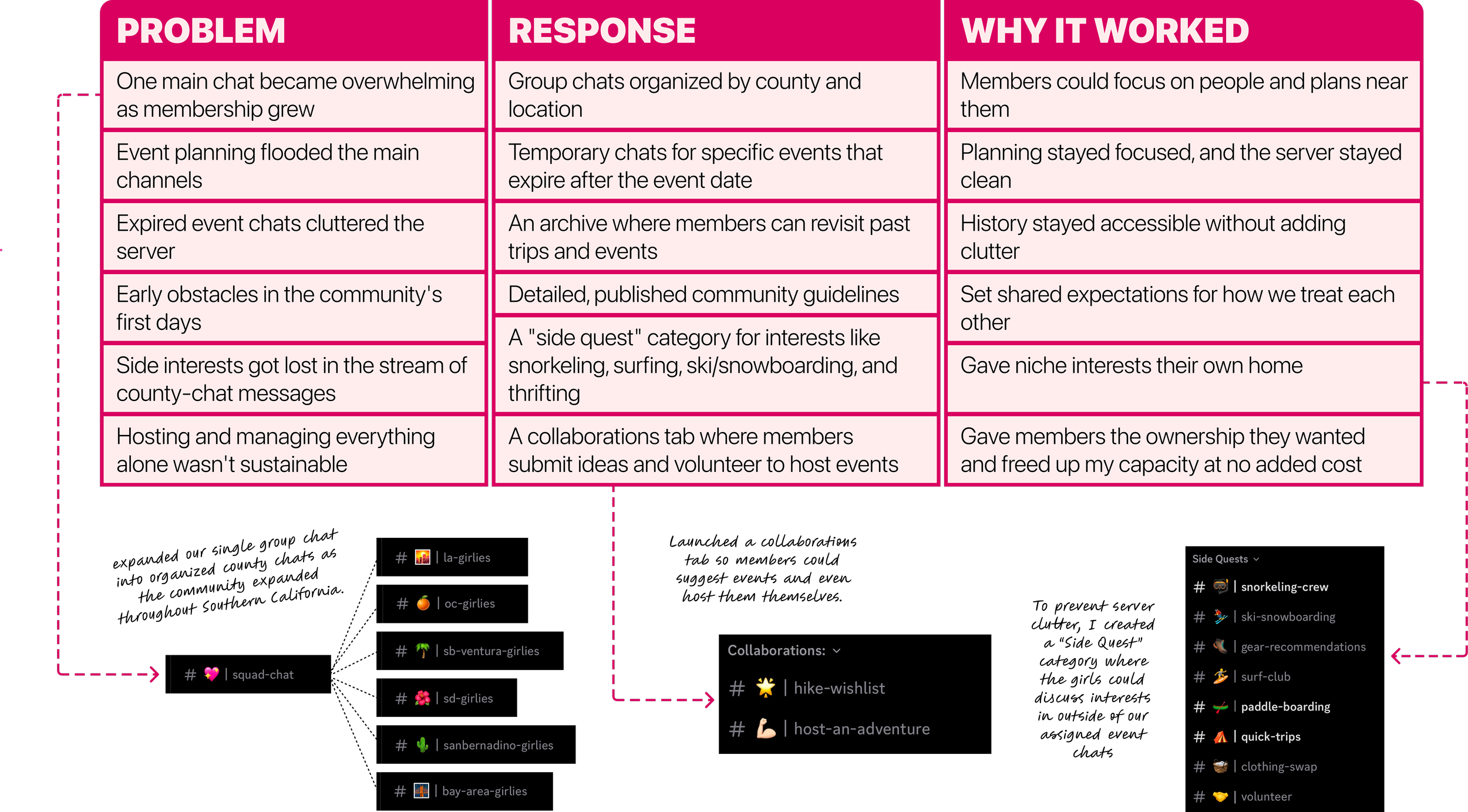
The collaborations tab is the decision I'm proudest of. It answered two needs at once: the community wanted a say in what we did, and I needed to scale without hiring. A collaborative calendar made members co-creators instead of attendees.
The application process:
Quality over vanity metrics.
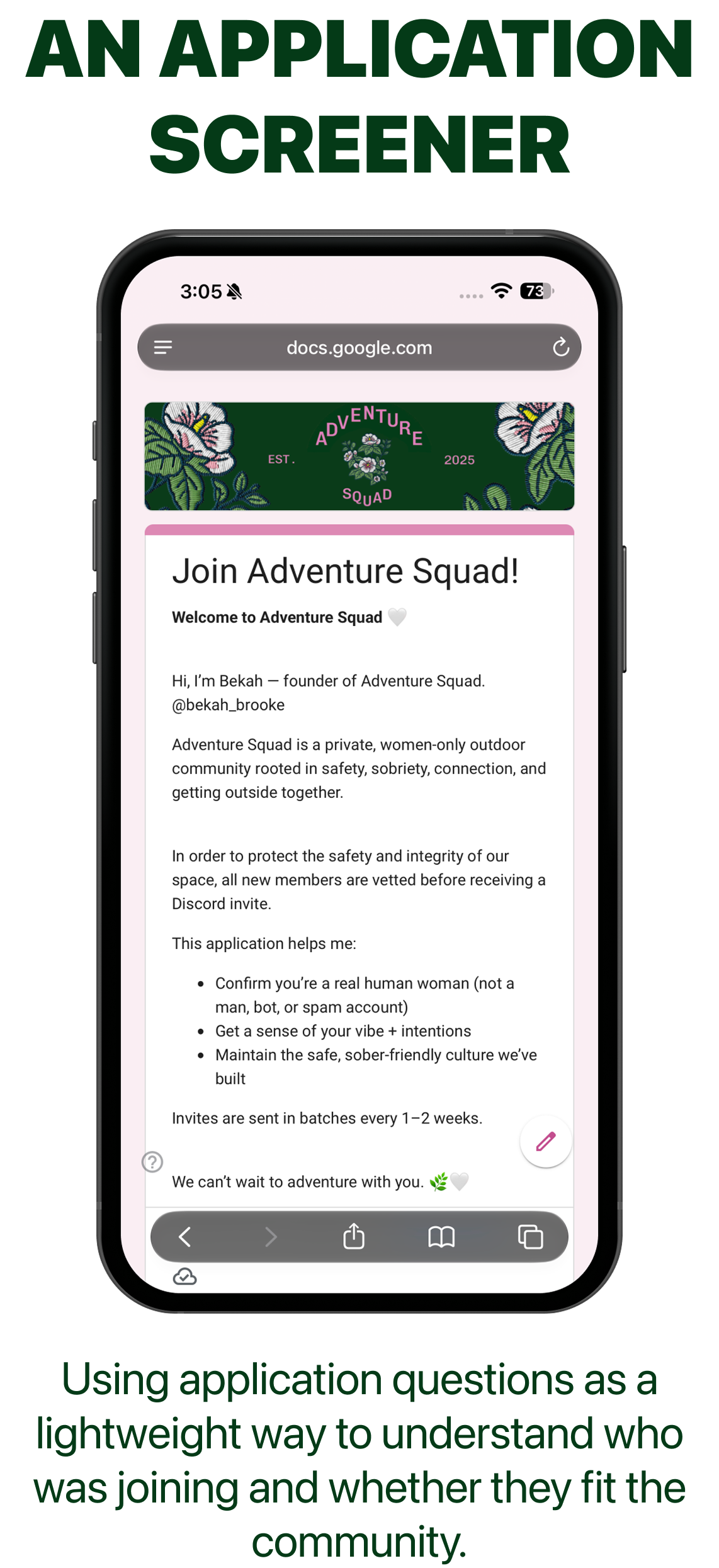
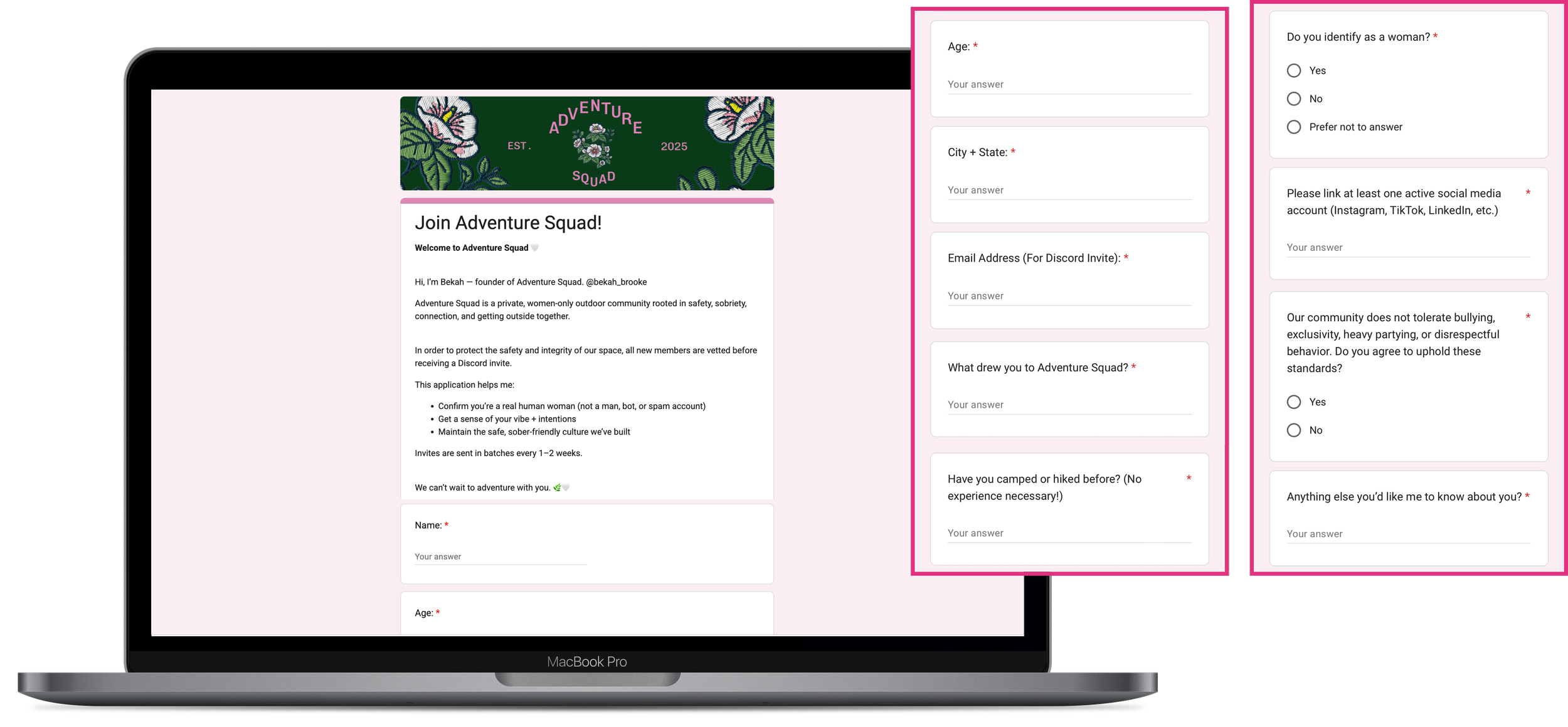
The surge in interest created a new problem: fast growth doesn't guarantee an engaged community. To make growth sustainable, I introduced an application process designed to confirm that members were real (not bots), female-identifying, and living in Southern California.
The goal was a database of local, engaged members who were ready to adventure at a moment's notice, rather than hundreds of idle members scattered around the world. Trading raw numbers for relevance made it possible to plan real, in-person events.
Results
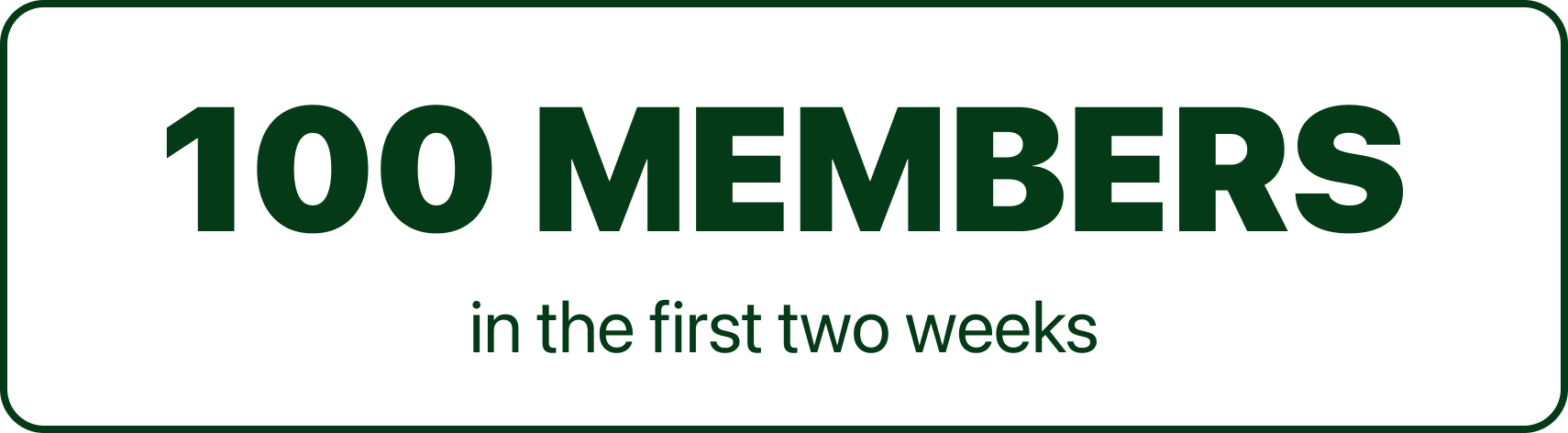
Growth: 100 members in 2 weeks → 407 in 6 weeks → 800+ at 10 months
Events: 40+, including multiple weekend-long excursions
Revenue: $22k+ gross from camping trips, generated within the few months after we officially launched trips
Sponsorships: The brand Hipcamp (a campsite hosting platform), sponsored Adventure Squad trips all over California.
Operations: Zero paid staff. The community was branded and planned by me, with members stepping in to host through the collaborations calendar.
Community quality: A vetted, local, engaged membership rather than a large, inactive one
Next steps:
How I'd scale Adventure Squad
The community proved the demand. If I continued with Adventure Squad, this is how I would make it sustainable and profitable as it grows:
Build a tiered event model. Offer a range from free to low-cost to premium. Members would host the inexpensive camping trips using Adventure Squad as their platform, earning small-scale profit without needing me to plan or attend. That frees my time for fully curated, luxury trips, where the real profit is.
Hand off daily operations. Bring members in to help with sending Discord invites, checking social media messages, and other recurring tasks, so community management scales without all of it landing on one person.
Open host capacity immediately. Launch the collaborations calendar, so hosting is shared as the community grows rather than added once demand is high.
Measure what matters. Track retention and event attendance alongside membership counts, to see which events and channels keep members engaged.
Formalize feedback loops. Add regular member surveys alongside social listening to capture what quieter members aren't saying publicly.
Reflection
Adventure Squad showed me that product design can look different depending on the brand and the situation, and that research doesn't need a lab to be rigorous. It needs an honest signal, a fast way to act on it, and a willingness to be corrected by the people you're building for.
I didn't have months to iterate before launch, or a team of collaborators. I built on the go, guided by audience response, social growth, and members' immediate needs. Nearly every feature was a response to something I saw breaking, and the community was often ahead of me in telling me what it needed.
The biggest lesson: this wasn't just a fun idea. It was a real, viable, and profitable product, with $22k+ in gross trip revenue to show for it. It also taught me about sustainability. The same demand that made it work made it hard to run alone, and the small daily tasks eventually led me to step away.
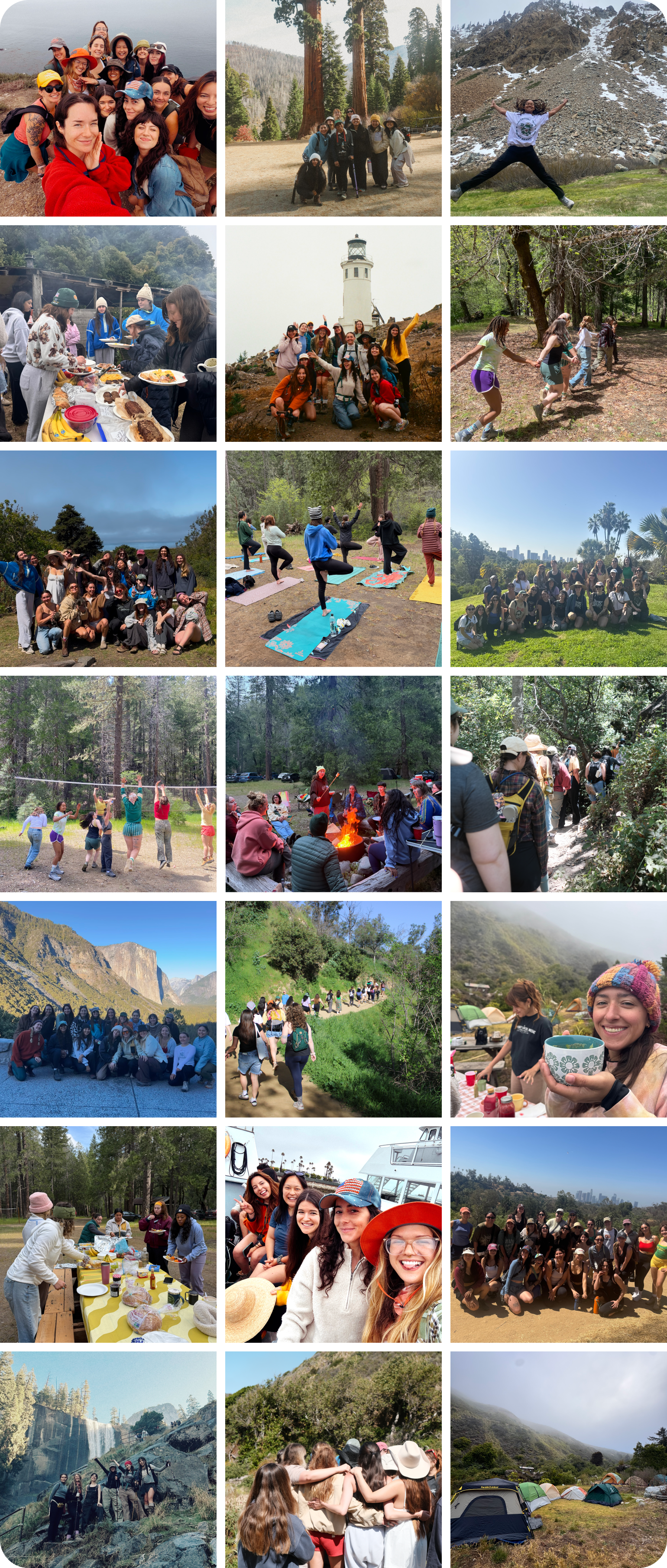
OUR SCRAPBOOK!